New to Paradox Live? 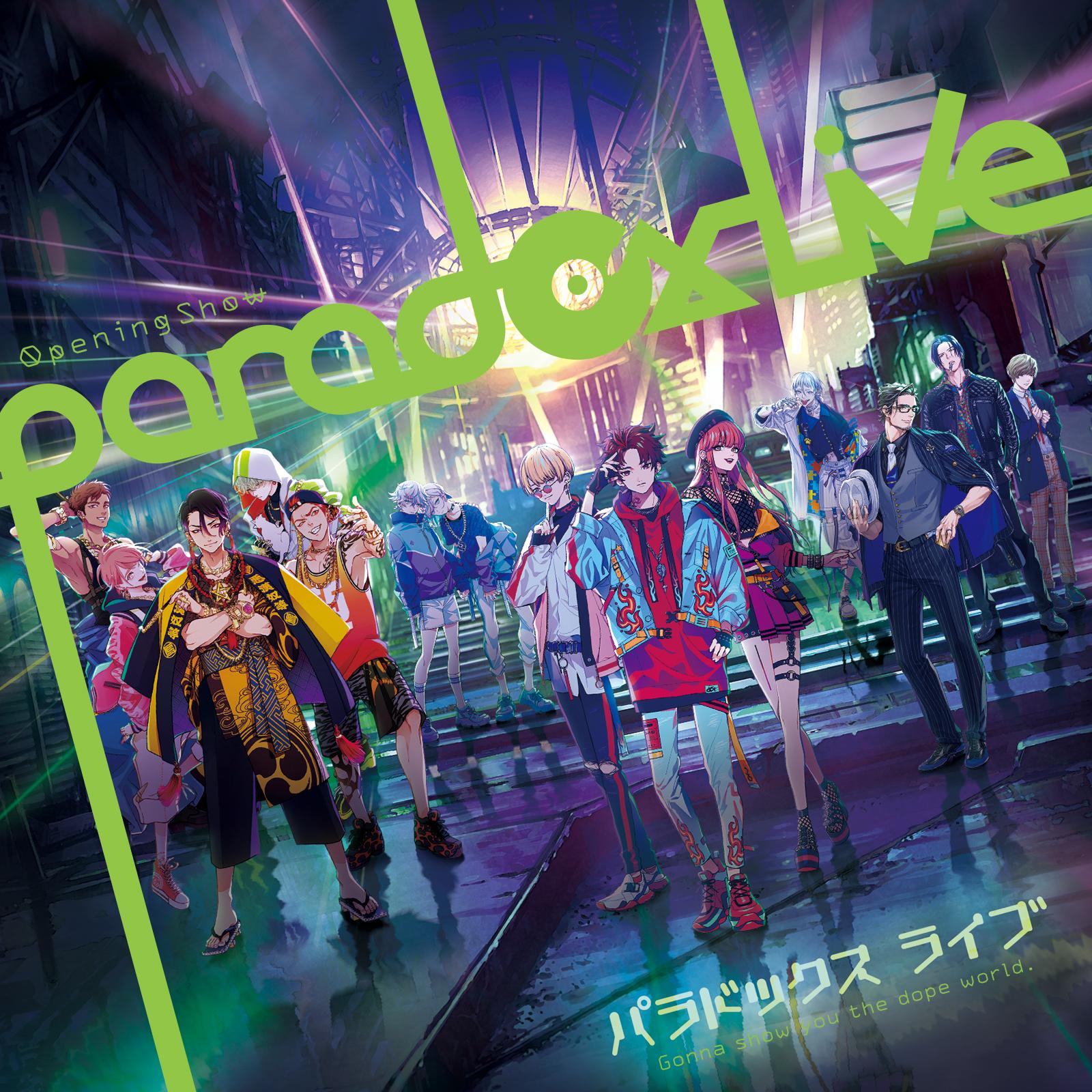
This crash course assumes that you are starting from zero, which is, admittedly, probably pretty unlikely if you're on this site; if you have any knowledge coming in, some of this may come across as redundant!
Paradox Live is a Japanese multimedia franchise, created by GCrest and distributed by Avex Records, featuring many popular seiyuu and utaite among its cast. The big question people often ask is: is it an anime? Is it a mobile game?
The answer is that is none of the above; it is a multimedia franchise (often called a "media mix" in Japanese), with the core content consisting of audio dramas and music. Though there is an anime (with which I have multiple dealbreaking problems) and several other more faithful adaptations of parts of the main story, the core of the franchise is audio dramas.
A crash course
The music is hip hop (in a very "animusic" way, so be aware that it is meant to be very market-friendly), with various groups having different styles within the overarching umbrella; for example, one group's music tends to resemble trap, whereas another's is influenced by east coast jazz rap, one blends traditional Japanese music and Chicano rap, and yet another is 2000's style rap-rock. The series's core narrative gimmick is that the characters use seemingly-supernatural metal accessories to create elaborate illusions on stage; these accessories and their side effects turn out to be central to the overarching story.Format
The core part of canon is CDs consisting of songs and audio dramas-- basically, radio plays.
The majority of these CDs are "battle rounds", where two teams are going to be going up against each other in a song competition, where every round has a given theme.
While the main conceit of the plot is ostensibly the competitions, the actual draw of the franchise is the character interactions; in my opinion, you'll get the most out of it if you view it less as a tightly-paced plot and more as an ensemble piece with plot threads interwoven through it.
Where do I start?
I have a page right here to help people know where to start! But the extremely short version is: open the "Drama Tracks" page in the sidebar, start at the start, and read every one in order.
Voting
The trajectory of the story is partially dictated by fans voting on who they want the winner of each battle round to be. This is accomplished via Dope Points, which are gained through purchasing CDs and other social media action. More details about this are on the page for Paradox Tribe, the official fan app.Fans can vote on who they want to win a given round for a period of ~about two weeks after the release of a CD battle round CD. Most fans only vote for their favorite group, and might hoard points for a very long time waiting for their team to be up at bat.
Dope Points have also been used to determine aspects of shuffle teams instead of the main battle rounds.
Social Media
While characters having social media accounts is not unheard of, Paradox Live's entire cast have twitter accounts that often provide hilarious and entertaining glimpses into the character's lives, in addition to periodically doing in-character reply events on the fan app. More information about this is on the Social Media page.The cast's social media antics are a source of a great many jokes within the fandom.
Print Media
Occasionally, as is common for these kinds of franchises, supplementary material will come out in magazines or in special supplementary information books known as "fanbooks". (Despite what we may think when we hear the term in English, these are wholly official; they are more "books for fans" rather than "books by fans".) These contain expanded profiles and often additional material, such as floor plans of the characters' homes, daily schedules, mini-manga, and short stories.
Additionally, in 2021, a light novel, Hidden Track "MEMORY" was released. This effectively serves as a backstory novel for the first four units.
In 2026, Hidden Track "MEMORY" was released for free on the web, and a second volume of four chapters, each focusing on the latter four groups, was serialized throughout the summer.
I consider both volumes of MEMORY to be essential canon, to be read following Stage Battle and Battle of Unity respectively.
Adaptations and Other Media
In addition to the CDs and audio drama series, there are multiple adaptations:
- Stage Battle "COMIC" is a manga adaptation released serially on ZeroSum Comics Online
- Paradox Live On Stage is a series of stageplays adapting the story
- Paradox Live The Animation is a 12-episode anime adaptation that began airing in October 2023. (I do not recommend the anime for newcomers; you will be extremely lost if you watch it and try to skip ahead in the drama tracks, and many important character motivations are drastically changed, often insultingly.)
Ever since 2021, there has been at least one large-scale concert event where the seiyuu perform the songs from the franchise and we usually get a big announcement or two.